Warm-season transplants
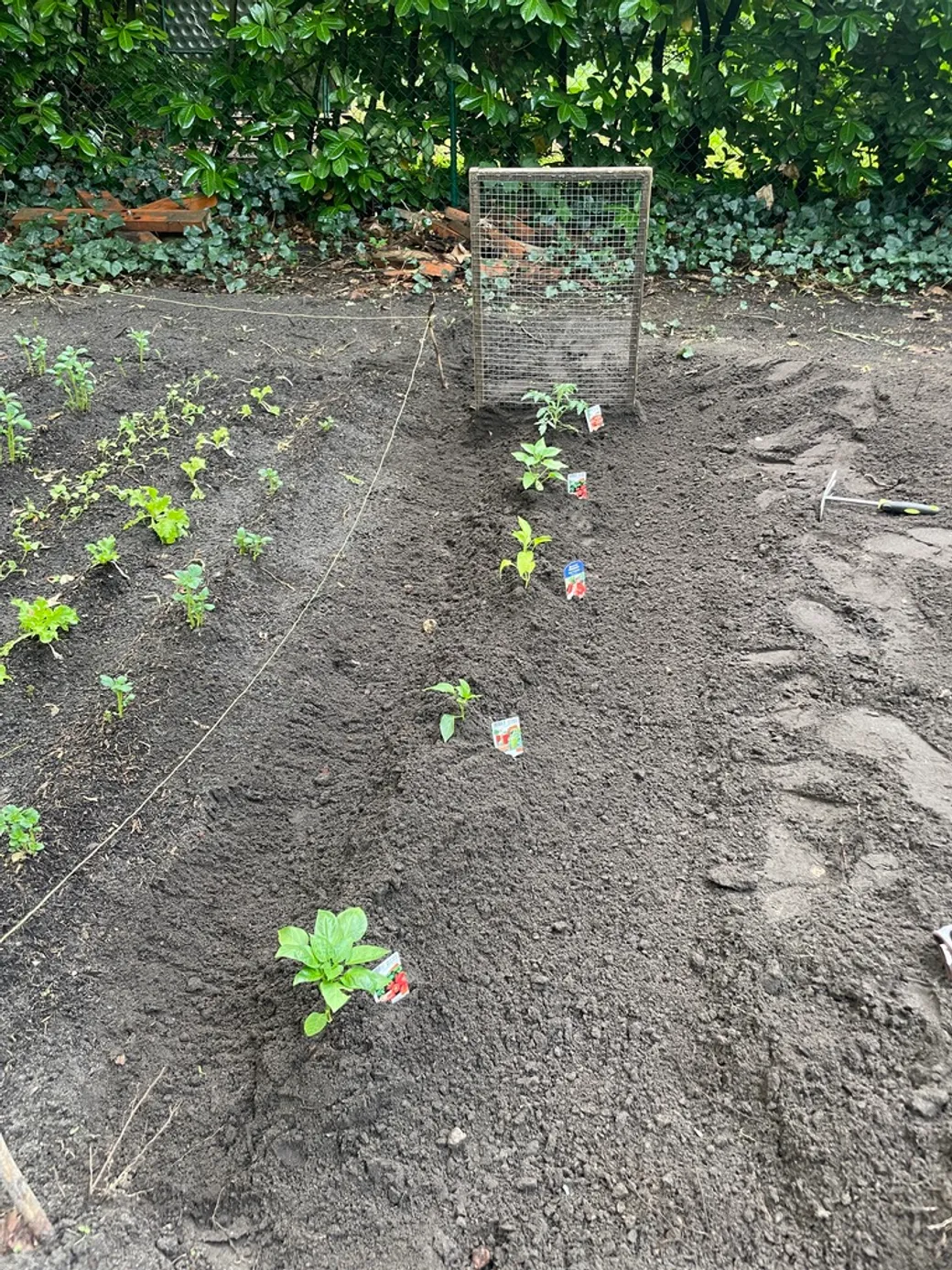
This sprint turned planning into planting. We used what we had learned about the
garden's light: the sunnier prepared line near the potatoes became the place for
peppers and one tomato, while the softer half-shade area became a herb and flower
corner with dill, parsley and companion flowers.
Goal for the sprint: place the new plants according to the real microclimates of
the garden. Done.
Epic record
01
Set a goal
- Problem
- We had starter plants ready, but they needed to be placed according to the real light in the garden instead of just filling empty soil.
- Current context
- The area next to the potatoes had been partly cleaned the week before and was sunny enough for warm-season crops. Another smaller area had more half-sun and half-shade, which made it better for herbs.
- Planned solution
- Use the sunny prepared line for peppers and one tomato, then plant dill, parsley and companion flowers in the more protected half-shade area.
02
Apply it
- Research
- Transplanting pepper and tomato starter plants · Choosing sunny beds for warm-season crops in Hamburg · Planting herbs and flowers together in partial shade
- Strategy
- Match each plant to the microclimate: heat-loving crops in the sun, herbs and flowers in the calmer half-shade area.
- What we did
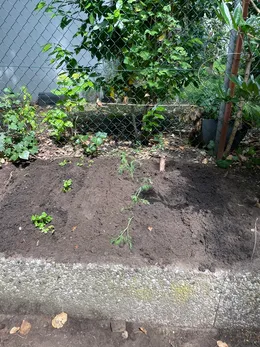
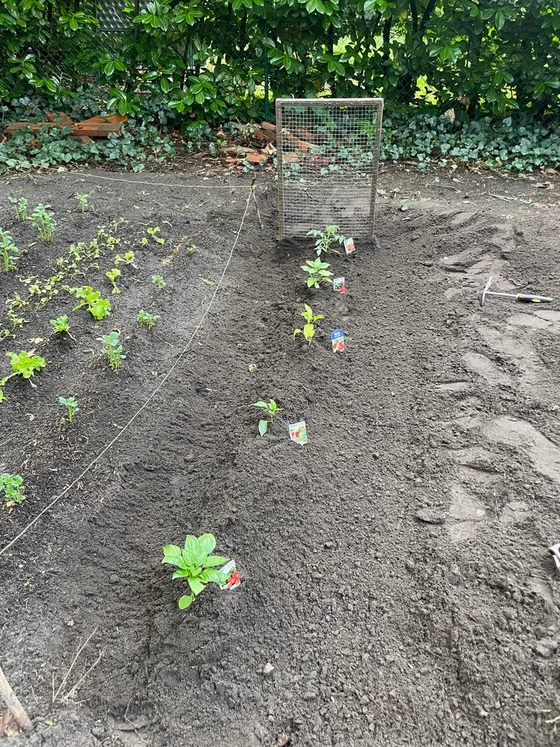
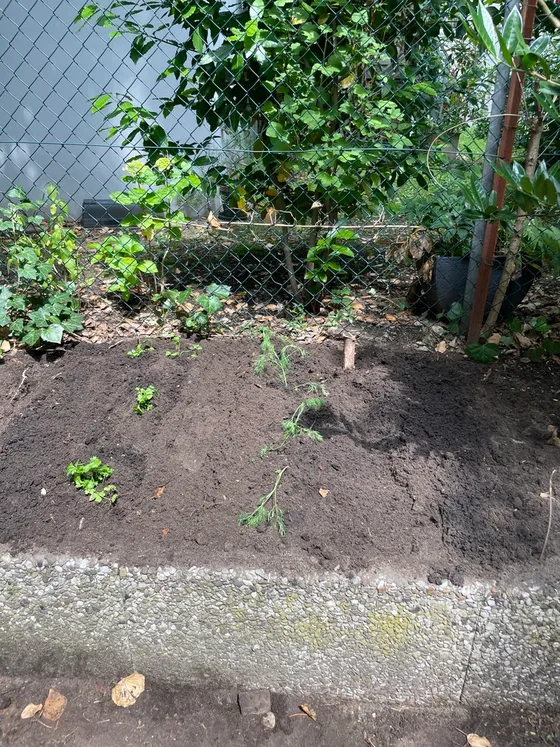
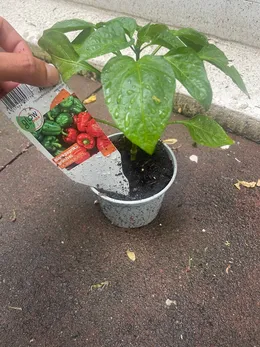
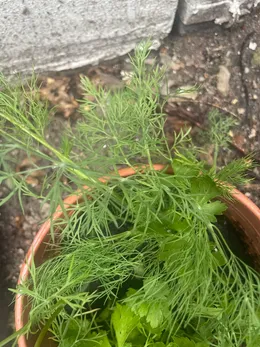
- We used the cleaned sunny soil close to the potato bed for the peppers and one tomato near the small garden grid. In a separate area with a bit more shade, we planted dill and parsley, then added flowers around them as companion plants.
03
Leave it better
- Improvement
- The garden now has a clearer planting logic based on light and plant needs.
- Result
- Sunny space is being used for fruiting crops, while the softer half-shade area became a small herb and flower bed.
04
Learnings
- Learnings
- Peppers and tomatoes need the warmest, sunniest and most sheltered places we have. · Dill and parsley are more comfortable in a softer spot with some shade, especially while they recover from transplanting. · Flowers around herbs make the bed more useful: they support pollinators and turn a simple herb corner into a small companion planting zone.
Next signals
- Water the new transplants steadily during the first week.
- Watch whether the tomato needs support near the grid.
- Track how the half-shade herbs recover after transplanting.